

Introduction
Everyone wants to innovate in healthtech. But in the rush to launch, too many teams design around features — not around the trust systems healthcare actually runs on. What we’ve learned building platforms in regulated spaces is this: compliance is not a constraint — it’s the design brief.
“Regulatory risk isn’t something you ‘solve’ later. If it’s not shaping your architecture and workflows from day one, you’re already behind.”
— Matthew Rogers, CEO, Preux
“Regulatory risk isn’t something you ‘solve’ later. If it’s not shaping your architecture and workflows from day one, you’re already behind.”
Matthew
1. Trust is Earned Through Predictability, Not Innovation
In high-risk environments, clinicians and administrators need systems that are boringly reliable. Every step must be verifiable. Every handoff auditable. Design becomes less about delight — and more about ensuring nothing falls through the cracks.
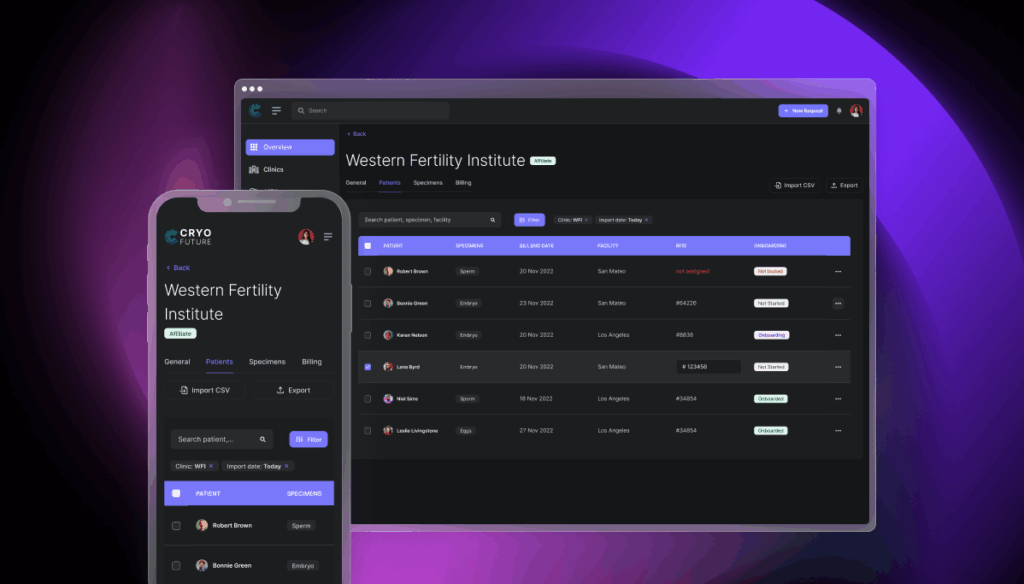
In our work with CryoFuture, this translated into a platform that tokenizes every specimen movement — not as an afterthought, but as a core system rule. Movement isn’t just tracked; it’s enforced. And that design principle reduced manual errors and made compliance audit-ready from day one.
“The most effective healthtech products don’t just enable action — they confirm and prove every step of it. It’s not about speed. It’s about safety at scale.”
— Matthew Rogers, CEO, Preux
2. Speed Still Matters — But the Right Kind
We often meet founders who want fast builds. And we understand that pressure. But in healthcare, fast must still be stable, secure, and human-proof.
In our collaboration with SnapCare, a digital staffing platform, we saw how even small gaps in flow could cause chaos — missed shifts, credentialing errors, compliance violations. Our role was to design and build systems that absorbed complexity without creating new risk.
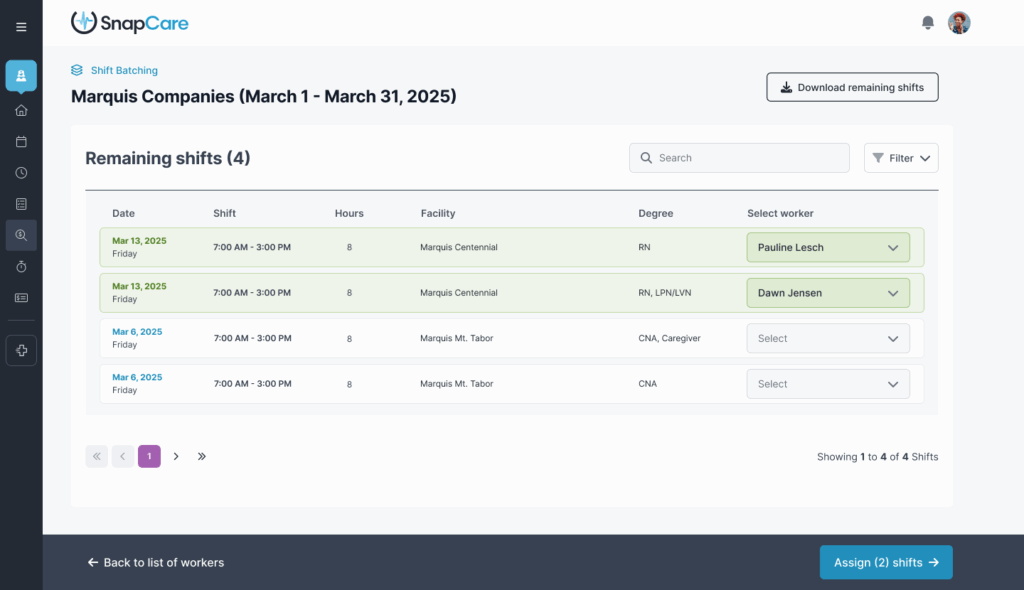
That means building for fallback states. Role-based access. Clear escalations. These are the “boring” parts of the system — and they’re often the parts that save teams when things go wrong.
“Designing for healthtech means assuming the user is under pressure. Your system needs to catch what they can’t afford to miss.”
— Matthew Rogers, CEO, Preux
3. A Compliance-Driven Design Framework (In Brief)
Here’s how we approach healthtech systems:
| Priority | Principle | Implication |
|---|---|---|
| Auditability | Every action must leave a trail | No silent state changes |
| Role Enforcement | Interfaces adapt by permission & context | Prevents missteps and overreach |
| Data Sensitivity | Assume breach risk from day one | Encryption, session control, logs |
| Realism | Build for tired people, not ideal flows | Defaults matter more than UX polish |
| Interruption-resilience | Save partial work, recover easily | Reduces clinician frustration |
“Compliance done early isn’t just safer — it’s faster. Retrofits waste time. Clean builds scale.”
— Matthew Rogers, CEO, Preux
Conclusion
Healthtech doesn’t need more vision decks — it needs better infrastructure. The kind that understands how regulation, people, and pressure interact. Compliance isn’t a blocker to innovation — it’s the blueprint for building software that actually works in the field.
“We’ve seen too many platforms try to solve healthtech problems with optimism instead of architecture. A compliant product is a scalable one.”
— Matthew Rogers, CEO, Preux